AI as a Force for Good: Lessons from COP28
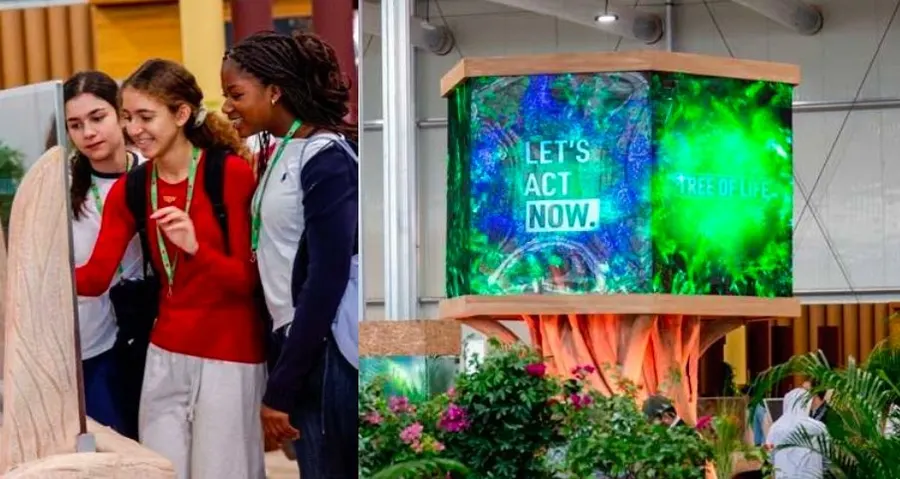
At COP28 in Dubai, we built an AI installation where people could have a conversation with a tree. Not a metaphorical conversation — an actual, real-time spoken exchange with an AI system that had been given the voice and perspective of the Ghaf tree, the UAE's national tree and a symbol of resilience in arid ecosystems.
The pledges people made during those conversations were captured and transformed, in real time, into unique generative artworks. The project was called the Tree of Life, and it remains one of the most meaningful things I've worked on.
The Brief: Technology in Service of Urgency
Our collaboration with COP28 started with a challenge that sounds simple and isn't: how do you make climate pledges feel real and personal, rather than performative?
The instinct in tech-forward events is to reach for spectacle — the biggest screen, the most complex interaction, the most impressive demo. But spectacle without emotional resonance is just noise. We went in a different direction.
"Imagine if a tree could communicate with us. What change could it make?"
That question became the entire brief. Everything else followed from it.
How the Technology Served the Story
The Tree of Life installation used conversational AI — trained on climate science, the biology of the Ghaf tree, and a defined emotional character — to have genuine dialogues with visitors. The AI wasn't just providing information. It was expressing concern, asking questions, challenging assumptions.
When a visitor made a pledge — a specific, personal commitment to a climate action — the system captured the language of that pledge and fed it into a generative art engine. The result was a unique visual piece that the visitor could keep: a record of their commitment, made tangible.
What I Learned About AI and Empathy
The most common critique of AI is that it lacks empathy — that it can simulate care but not feel it. And that's true. But here's what I observed at COP28: the empathy didn't need to come from the AI. It came from the interaction.
People who spoke with the Tree of Life left differently than they arrived. Not because the AI convinced them of anything new, but because the act of articulating a commitment — to an entity that was listening, responding, and reflecting it back — made the commitment more real. The AI was a mirror. The empathy was human.
That's a model I think about constantly now. The question isn't "can AI be empathetic?" The more interesting question is: "can AI create the conditions for human empathy to emerge?"
Three Principles for Purpose-Driven AI Activations
1. The technology should be invisible
Visitors at COP28 weren't thinking about language models or generative art engines. They were thinking about the tree. Good purpose-driven AI disappears into the experience.
2. Participation beats observation
The most powerful moment in any activation is when a visitor stops being an audience member and becomes a participant. Design for that transition.
3. Leave something behind
The generative artwork was crucial — not as a souvenir, but as a record of commitment. When people leave with something they made, they carry the experience forward. Digital or physical, the artefact matters.
Purpose-driven technology isn't a category of project. It's a way of asking a different set of questions from the start. What do we want people to feel? What do we want them to do? What do we want them to remember? Answer those first. Then find the technology that serves those answers.
Get the next post
New essays on AI, creative technology, and building at the edge. No spam, unsubscribe anytime.
Powered by Substack