4 min read
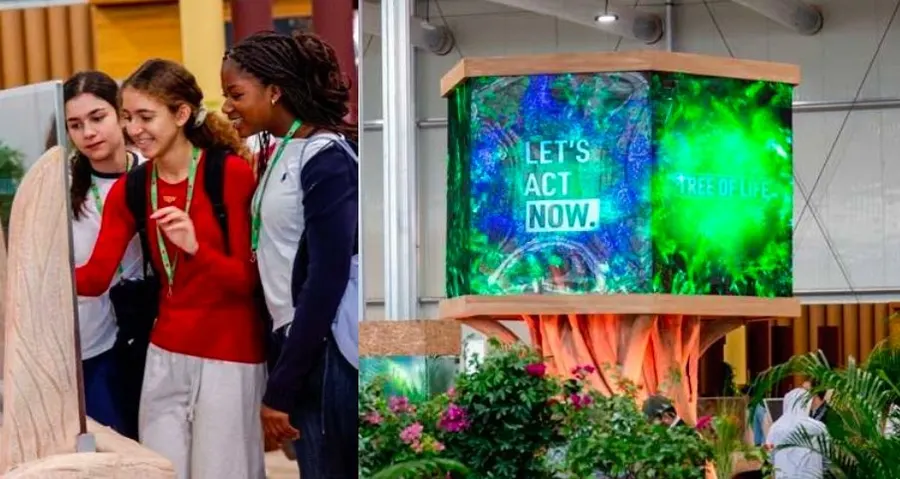
At COP28 in Dubai, world leaders, delegates, and activists stepped up to a living AI installation and spoke directly with Mother Nature — sharing their climate commitments, which were transformed in real time into unique generative artworks, creating a living record of the world's collective pledge to the planet.
COP28 is the world's most significant annual gathering on climate — attended by heads of state, scientists, activists, and business leaders from across the globe. The brief was to create an installation that honoured the gravity of the moment while making it genuinely participatory: an experience where attendees didn't just observe the climate conversation, they became part of it.
Most event installations at summits of this scale are passive: impressive visuals, information displays, branded environments. The opportunity here was to build something that required human participation and produced something meaningful in return — something that could turn individual climate intent into collective, visible action. The challenge was doing that at scale, in multiple languages, with a hugely diverse audience, while maintaining the emotional weight the subject demanded.
The Tree of Life was conceived as a living, breathing AI installation — a physical structure at the heart of the COP28 venue that invited participants to enter into a conversation. Powered by a large language model, the installation embodied Mother Nature as an AI persona: wise, urgent, and deeply engaged with each participant's commitments.
Participants approached the installation and spoke their climate pledge directly to Mother Nature — what they committed to change, what they would protect, what they would sacrifice. The AI responded in kind: engaging, affirming, and gently challenging, making each interaction feel like a genuine dialogue rather than a form submission.
Each pledge was then processed through a generative art system, which created a unique AI-curated artwork based on the language, themes, and emotional register of the participant's commitment. These artworks became part of an ever-growing digital mosaic — a living visual representation of humanity's collective response to the climate crisis, displayed continuously throughout the event.
Over the course of COP28, thousands of participants engaged with the Tree of Life — from world leaders to young climate activists. The installation generated hundreds of unique artworks, each representing a real human commitment, and the growing mosaic became a powerful visual artefact of the conference. The project demonstrated that AI, when deployed with genuine intentionality, can be a tool for collective meaning-making — not just engagement.