Is Using AI Lazy? Why Taste Is Still My Job
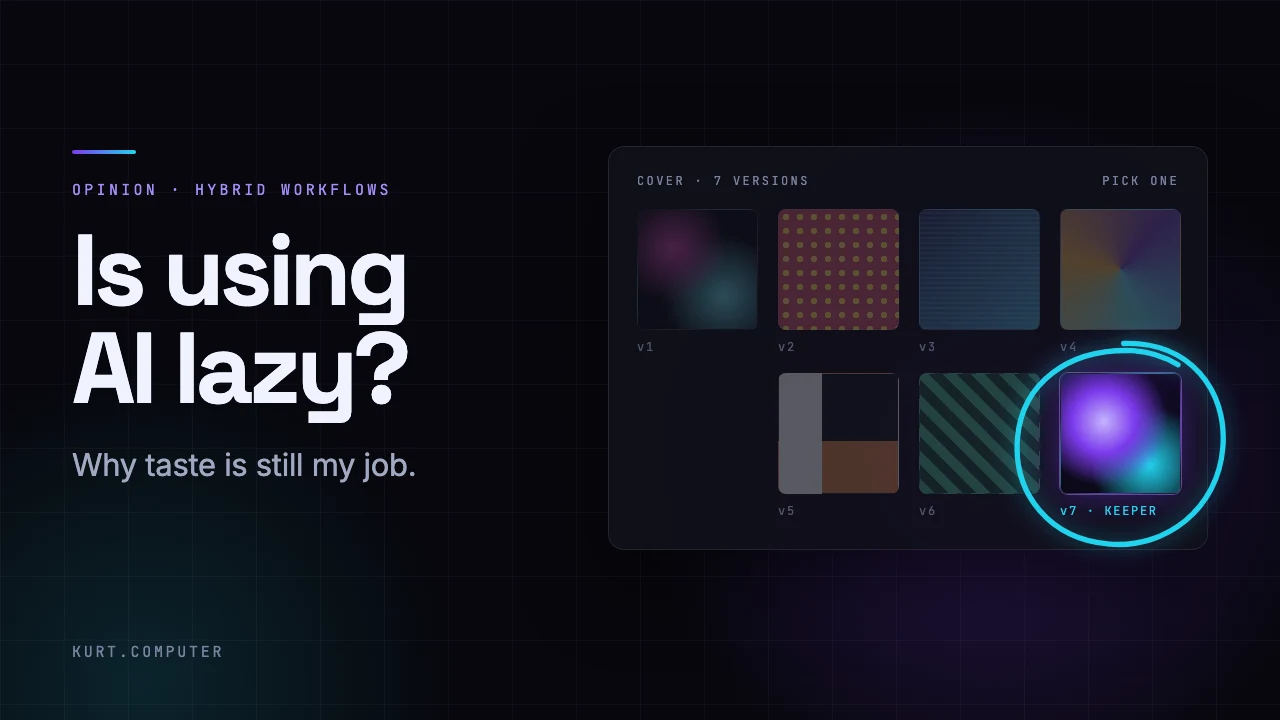
The cover for my last EP went through seven versions before I settled on one. Dark neon, pop art, a frame pulled from a video, a photomontage, and three more after that. I generated each one in minutes. Choosing between them took far longer.
A lot of my projects run that way now. AI produces options quickly, and I spend my time deciding which one is right. People sometimes hear the first half of that and assume I've stopped working. The deciding is where most of my hours go now.
- Most of my work is a hybrid. AI handles volume, repetition or feedback. I keep the direction, the judgement and the final yes or no.
- Taste is the human part. AI can check whether something matches the prompt. Whether it's good is still my call.
- Lazy is shipping the first output unchecked. I automate the repetitive layer so more of my time goes into judgement.
- The anger at prompt-only music and art is fair. It's aimed at a way of working that's a long way from mine.
- AI takes over tasks before whole jobs. Work built on judgement and accountability is harder to replace.
What does a hybrid workflow look like?
The split changes from project to project. Sometimes AI generates options and I choose. Sometimes I make the thing and AI gives me notes. Either way, the direction, the judgement and the final yes or no stay with me.
Music. The core of it is still mine. I dig for samples, build the beats and do the arrangement myself. AI comes in later as a second pair of ears: where the arrangement drags, which sections can be tightened, what's fighting in the mix, how to get a cleaner mixdown. I take some of that advice and ignore the rest.
YouTube. In one of my recent videos, an AI agent built every frame from one brief: the script, the animation, the sound design and the edit. My job was to say yes or no at every stage. The script went through nine versions. Every claim in it went through a fact-check, and any line marked as my opinion or my decision waited for me.
Art and animation. I threw out a 90-second animated film an agent built for me, music and all, because it looked like a kindergarten art project. It did what I'd asked. What I'd asked for wasn't good enough yet, and noticing that was my job.
Writing. My video scripts become the starting point for posts on this blog. The first draft from that workflow came back almost word for word from my voiceover, which reads badly on a page. I sent it back to be rewritten from scratch, and that rule is now part of the workflow.
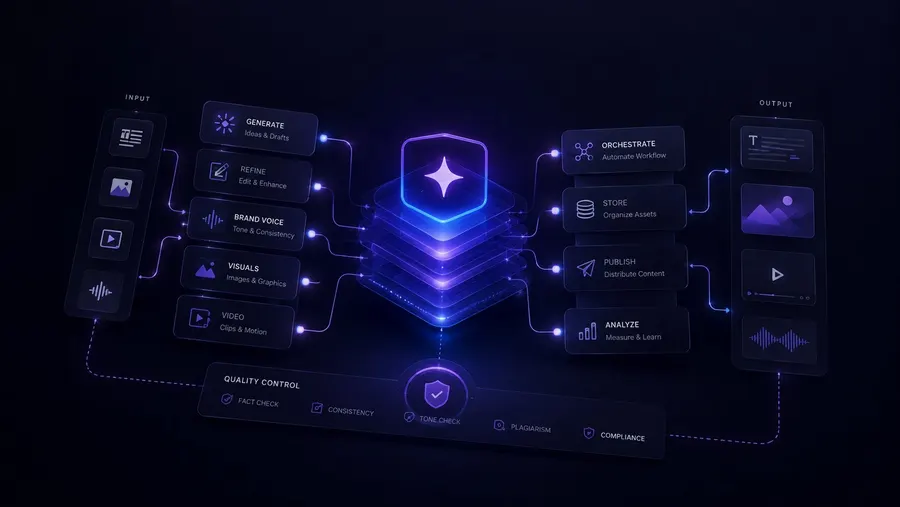
Underneath all of that, the repetitive production work is automated. Every post I publish here touches five files: the post, the blog index, the sitemap, the RSS feed, and an llms.txt file for AI search tools. Exports, file naming and rendering every format a platform wants happen without me. The tools are in the automation stack I use to run an AI content studio.
Why is taste still a human job?
AI can tell you whether something matches the prompt. Whether it's good is a separate question, and that one is still mine.
Taste is knowing what you're going for before you see it, recognising it when it shows up, and rejecting things that are close but wrong. Close but wrong is most of what a model produces. My taste comes from sixteen years of work and a decade of digging through record crates. No model has my references, my reasons, or my sense of when something is finished.
When a polished-looking draft takes minutes to make, the draft stops being impressive. The choices behind it carry the weight: what you kept, what you cut, what you refused to ship. If anything, AI exposes whether someone has taste.
Isn't that lazy?
The lazy version of my workflow is easy to picture: generate once, post whatever comes back. That version is giving AI a bad name, and I understand why people are tired of it.
I try to work smart rather than hard. For me that means getting as much as I can out of the effort I put in, and spending as little of it as possible on steps that don't change the result. Exporting a cover at every size by hand doesn't make it a better cover. Choosing between seven versions does. So I hand off the first job and keep the second.
The criticism I take seriously
A lot of the pushback against AI is fair, and in music, art and design I understand it completely.
Some people type a prompt, get a finished track back, and release it as their own original work. They haven't dug for a sample, built a beat or made a single arrangement decision, and they haven't licensed anything either. I've spent years learning to do those things, so I get why musicians are angry.
Art and design have the same problem. Someone puts a living artist's name in a prompt and posts the result as their own work. Someone else takes the first logo a model hands them and calls it a brand identity. Neither of them set a direction, gathered references or made any of the small calls about composition, colour and type that turn an image into design. I've worked on projects with digital artists like Krista Kim and Mad Dog Jones, and I've seen how long it takes to build a visual language that's recognisably yours. Watching it copied with one line of text would make me angry too.
When I use AI for art and design, I start from a brief and my own references, push through versions until one is right, then composite, edit and set the type myself. The EP cover took seven rounds of that. I don't put living artists' names in my prompts.
Those are the versions people are reacting to, and they're a long way from how I work.
The same thing is happening everywhere else. Feeds are filling up with generated content nobody checked, and I've written about how AI UGC tries to manufacture trust it can't earn. People are also right to ask whose work these models learned from, and whether those artists agreed. Those questions don't have tidy answers yet.
I'm not trying to convert anyone. If you love doing every step by hand, that's a good reason to keep doing it. For my own work, the hybrid version is where I've found the most room to make things I'm proud of.
Will AI replace people's jobs?
Some, yes. It depends on how much of the job is the repetitive layer.
AI replaces tasks faster than it replaces whole jobs. If most of your week is resizing one campaign into every banner size, transcribing interviews or writing endless variations of the same product description, a lot of that work is going to go. I'd rather say that plainly than pretend it isn't happening.
Jobs built on judgement are harder to replace: deciding what to make, knowing the client, reading the room, owning the result when it goes wrong. When a campaign misses, nobody calls the model to explain. A person answers for it.
New jobs are showing up too. My own title, AI forward deployed creative, didn't exist a few years ago. Most of what I do in it is the human half of the hybrid: working out what a client needs, setting the direction, and deciding when the work is good enough to ship.
And I still think people are smarter than these tools in the ways that count. AI is faster than me at plenty of things. It writes code I couldn't write and renders in minutes what would take me days. But we built these tools, and we decide what they're for. A model doesn't want anything. It doesn't know why a project matters, who it's for, or when to stop.
Where does the saved time go?
Some of it goes back into making things: more videos for my YouTube channel, more music, and side projects like Souldigs, my vinyl discovery platform. I'm a builder at heart, and a hybrid workflow lets me build more of what I care about.
The rest goes to the people I love. There's more to life than work, and for a long time I let the busywork eat into evenings that belonged to my family. Some of the nights I used to spend exporting files and fixing sitemaps now go to them.
How to start
Pick one project and split it into two lists: steps that are the same every time, and decisions that need your judgement. Automate from the first list, one step at a time, and check each result properly. For the creative part, try what I do with music. Make the thing yourself, then ask AI for notes instead of a finished version: where it drags, what's muddy, what could go. Then decide for yourself which notes to take.
If you don't write code, my guide to Claude Code for non-developers walks through getting started.
Frequently asked questions
Is using AI lazy?
Not by itself. Lazy is publishing the first thing a tool produces without judging it. A hybrid workflow automates repetitive production steps and keeps direction, selection and the final decision with a person.
Can AI have taste?
In my experience, AI can check whether an output matches a prompt, but it can't decide what's worth making or which option is right for a particular project and audience. That judgement comes from a person's references, experience and intent.
Will AI replace creative jobs?
Some roles will shrink, mainly ones made up of repetitive production tasks such as resizing, transcribing and templated copy. Roles built on judgement, client relationships, creative direction and accountability are harder to replace, and new roles that combine creative direction with AI workflows are appearing.
What is a hybrid AI workflow?
A way of working where AI handles volume, repetition or feedback, such as generating options, suggesting edits, exporting and rendering, while a person sets the direction, makes the creative calls and approves the final result.
What parts of creative work should you automate?
Repetitive steps that need no judgement: file naming, exports, resizing, publishing chores and rendering versions. Keep idea selection, editing choices and quality control for yourself.