AI Cloned Adobe in 8 Days: What ArtCraft Means for Software

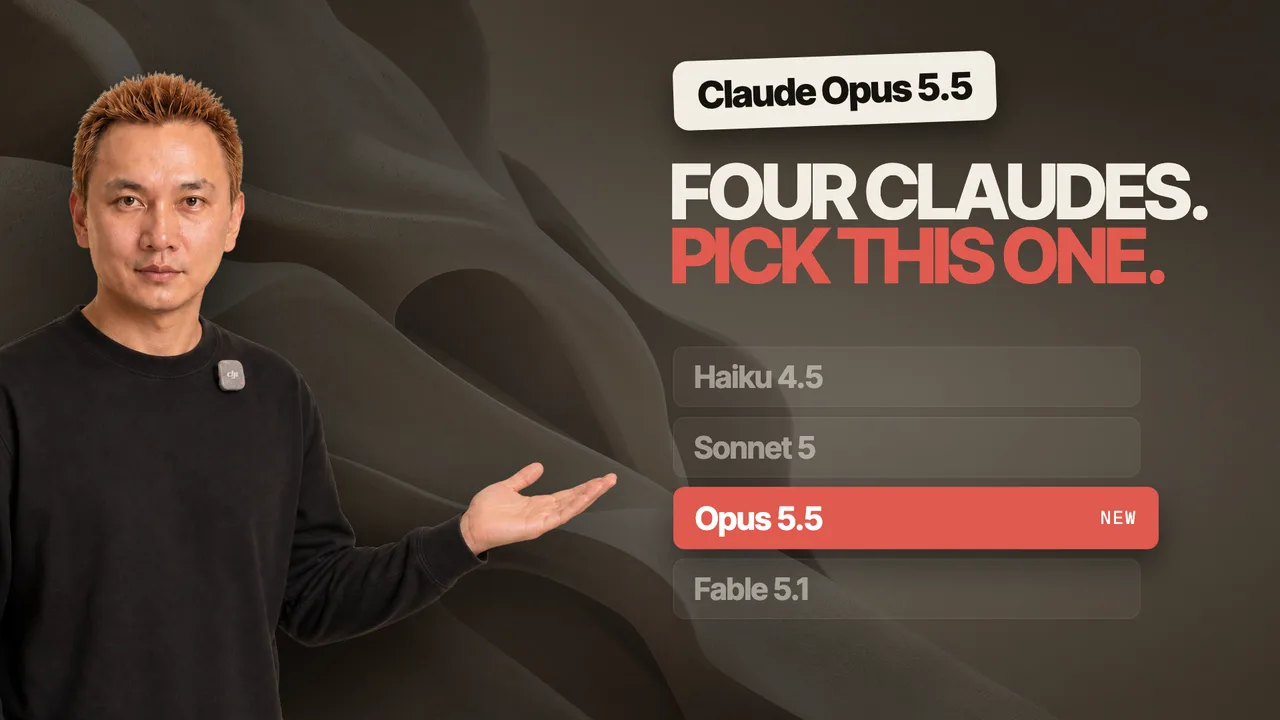
On 2 October 2026, a developer named Brandon Thomas released free, open-source versions of seven Adobe apps: Photoshop, Illustrator, Premiere Pro, After Effects, Lightroom, InDesign and Acrobat. His company, ArtCraft, calls them clean room reimplementations. He says Claude wrote them, and the oldest commit in the code is dated 30 September.
Adobe charges $69.99 a month in the US for its Creative Cloud Pro bundle. ArtCraft's versions, which it calls the Craft apps, are free, and the Photoshop one passed 20,000 stars on GitHub within a week of its first release.
I love open source, and I use Claude to build the tools that run my own studio, so this should be a story I cheer for. I'm a little uneasy about it all the same. To work out why, I went through the repos, the court cases behind clean room software and Adobe's own filings. This is the written companion to my latest video, with the detail that didn't fit into nine minutes.
- Seven Adobe clones took about a week. The first commit landed on 30 September, eight days after Claude Opus 5.5 came out. Every app had a version 0.1.0 by 2 October, and five more clones followed on 7 October.
- They aren't ready for professional work, and the project says so. Photoshop files open with bugs. Premiere Pro, After Effects and InDesign projects won't load, and plug-ins aren't supported anywhere.
- A "clean room" label doesn't settle whether they're legal. It's evidence that no code was copied. It doesn't cover patents, trademarks or Adobe's terms of use, and no court has tested it with an AI writing the code.
- Adobe is still growing. It reported record quarterly revenue of $6.76 billion in September. How cheap the rebuild was matters more, and that applies to every software company.
- Open source carries the cost. AI makes copying code close to free. Someone still has to maintain it, and about 60% of open-source maintainers are unpaid.
The video version. 9 min 2 sec. Watch on YouTube
- 0:00Seven free Adobe apps
- 0:48Eight days
- 2:02Clean room: is it legal?
- 3:53Should Adobe worry?
- 5:41Every app is a weekend project
- 6:46I love open source
- 8:29Where I land
What is ArtCraft?
ArtCraft is a company run by Brandon Thomas in Atlanta, which also makes an AI art studio app of the same name. Its Craft apps are free desktop programs, written from scratch in Rust, that reproduce the menus, tools and shortcuts of Adobe's Creative Cloud apps. They run on macOS, Windows and Linux, all but FilmCraft also run in a web browser, and the code is dual-licensed MIT or Apache 2.0.
This is what each app copies, and how far it gets with Adobe's own file formats, according to each project's README in early October.
| Craft app | Copies | Opens Adobe's files? |
|---|---|---|
| PhotoCraft | Photoshop | Yes, PSD and PSB, with known bugs |
| VectorCraft | Illustrator | Partly: only the PDF-compatible layer of .ai files |
| FilmCraft | Premiere Pro | No .prproj. Timelines come in as XML, EDL, AAF or OpenTimelineIO |
| EffectCraft | After Effects | No. .aep projects don't open |
| LightCraft | Lightroom | Imports Lightroom catalogues, with approximate rendering |
| DesignCraft | InDesign | No .indd. IDML import and export work |
| PdfCraft | Acrobat | Yes, it's a PDF editor |
PdfCraft was called PrintCraft until 7 October. On the same day the project added five clones of software beyond Adobe's: WordCraft (Word), GridCraft (Excel), DeckCraft (PowerPoint), CADCraft (AutoCAD) and SoundCraft (Pro Tools).
How was ArtCraft built in eight days?
Mostly by AI agents, with one developer directing them. Thousands of commits across the repos carry a Claude Opus 5.5 co-author line, and the planning documents measure the remaining work in Opus 5.5 agent hours. PhotoCraft's notes describe a session with eight agents running in parallel, and FilmCraft's describe five.
- 22 September: Anthropic releases Claude Opus 5.5 (my notes on that model).
- 30 September: The first commits. PhotoCraft's second commit, titled "one-shot", adds about 42,000 lines at once.
- 1 October: Thomas posts on Hacker News that he has "one-shotted Photoshop".
- 2 October: All seven apps get a version 0.1.0 release. Thomas names Opus 5.5 as the tool and Adobe's cancellation fee as his motive.
- 7 October: The Office, AutoCAD and Pro Tools clones appear.
- 9 October: PhotoCraft passes 27,000 stars on GitHub.
Together the seven apps come to about 1.7 million lines of code, counting tests, comments and blank lines.
Adobe's cancellation fees were already in the news. In March 2026 Adobe agreed to a $150 million settlement with the US government over early-termination fees and subscriptions that were hard to cancel, split between $75 million in civil penalties and $75 million in free services for customers. Adobe denied wrongdoing.
Built for AI agents to drive
Every Craft app comes with a command line tool that can run as an MCP server, an open standard for connecting AI assistants to other software, and an AGENTS.md file of rules for AI agents. Each menu item and tool maps to a named command, more than 500 of them in PhotoCraft. Claude can take a request for a gig poster or an animated title, work the app through those commands and return a layered project that you keep editing by hand.
That's how I'd want creative software to work with an AI assistant, and Adobe is heading the same way. Photoshop, Express and Acrobat have been free to use inside ChatGPT since December 2025, and Adobe released a Claude connector covering more than 50 tools across its apps in April 2026.
Can ArtCraft replace Adobe yet?
Not for paid work, and the project's own documentation is clear about it. Each README carries a dated self-assessment.
- PhotoCraft says it is "not yet a Photoshop replacement for daily professional work".
- FilmCraft rates itself about 50 to 60% ready for real work.
- PdfCraft estimates it has about half of Acrobat Pro's offline features.
- EffectCraft says it isn't yet a replacement for After Effects on client work.
None of the apps load third-party plug-ins, and plenty of professional workflows depend on them. Early testers were split. Gizmodo's tester said it felt like using a glitchy but real Photoshop, though Free Transform misbehaved. On Hacker News, one commenter who tried it called it "very broken software produced by AI", while another said VectorCraft was the best vector editor they'd used on Linux.
I'd try them on a personal project. I wouldn't put client work through them yet.
Is ArtCraft legal?
No court has decided, and the answer depends on which kind of law you mean. A clean room process is strong evidence against a copyright claim on the code. It offers no protection against patent or trademark claims, or against breaking a contract you signed, and it has never been tested with an AI on the clean side. I'm not a lawyer. What follows summarises the public record and isn't legal advice.
What is a clean room reimplementation?
A clean room reimplementation is software rebuilt by two separated teams. The first studies how the original behaves and writes a specification with no code in it. The second, which has never seen the original, writes new code from that specification. If the result resembles the original, the records show the resemblance comes from doing the same job.
The method dates from the early PC industry. In 1983 an appeals court ruled in Apple v. Franklin that code stored on a chip is protected by copyright, so companies building IBM-compatible PCs couldn't copy IBM's BIOS, the small program that starts the machine. In 1984 Phoenix Technologies had one group of engineers describe what IBM's BIOS did and a second group, who had never seen it, write a replacement. Phoenix then sold its BIOS to the companies making IBM-compatible PCs.
US courts have since drawn a line between what a program does and the code that does it.
| Case | Year | What it means for clones |
|---|---|---|
| Lotus v. Borland | 1995 | A spreadsheet's menu commands are a "method of operation" that copyright doesn't protect, so a rival could copy them |
| Google v. Oracle | 2021 | Google's reuse of Java's API declarations to build Android was fair use |
| SAS v. World Programming | 2017 | A working clone of SAS's software cost World Programming about $79 million, upheld on appeal, for breaking the licence it had agreed to and related state claims. The appeal court set the copyright question aside |
Where a clean room stops protecting you
Contracts are the weak point. Adobe's General Terms of Use, in force since 3 October 2025, ban reverse engineering, and section 17(B) spells out that this includes monitoring an app's inputs and outputs to recreate it. Some Craft repos had agent rules that allowed this kind of observation. DesignCraft's said InDesign could be observed as a black box, and LightCraft's and PdfCraft's allowed observing Lightroom and Acrobat. The rules show it was permitted. Nothing in the public history proves an agent did it.
On 8 October a maintainer merged a change to VectorCraft's rules that bans agents from running, automating or observing any Adobe software, citing section 17. As of 9 October the other repos hadn't made the same change.
Independent invention is no defence against a patent, either, and Adobe holds patents on features such as content-aware fill. On trademarks the project is more careful. The apps use engraved animal icons instead of Adobe's lettered tiles, and every README says the project isn't affiliated with Adobe.
Can an AI be the clean team?
A clean room only works if the people writing the code have never seen the original, and a model trained on a large share of the public internet can't prove that about itself. In September 2026 the Ninth Circuit's ruling in Doe v. GitHub treated GitHub's own duplicate-code filter as some evidence that Copilot can reproduce code from its training data, and left open whether Copilot's output infringes. No court has ruled on an AI clean room yet.
Ownership is unsettled too. US copyright requires a human author. The Copyright Office said in January 2025 that prompts alone are unlikely to make someone the author of AI output, and in March 2026 the Supreme Court declined to hear Thaler v. Perlmutter, leaving the human-author rule in place. Code that an AI largely wrote may have no copyright owner, which makes it hard to say what an MIT or Apache licence on that code covers.
Should Adobe be worried?
Not about these clones, at least not this year. Adobe's revenue is at a record, while its share price has been sliding as investors weigh what AI does to software subscriptions.
| Adobe | Figure | When |
|---|---|---|
| Quarterly revenue | $6.76 billion, up 13%, a record | Quarter to 28 August 2026 |
| Share price since its peak | Down about 65% | November 2021 to 8 October 2026 |
| Share price this year | Down about 31% | To 8 October 2026 |
| Creative Cloud Pro, US | $69.99 a month, or $839.88 a year | October 2026 |
| Enterprise customers | More than 20,000 | September 2026 |
| PDFs opened in Acrobat | More than 400 billion a year | September 2026 |
Software investors have been nervous all year. Anthropic released plugins for its Claude Cowork agent at the end of January, and on 3 February about $285 billion was wiped off software stocks in one session. In its latest annual report, Adobe describes its markets as having "limited barriers to entry" and warns that AI could let more competitors in.
Free competition is old news for Adobe. GIMP dates back to 1996, and Blackmagic has offered DaVinci Resolve for free since 2011. Canva made Affinity free in October 2025, and it reached three million downloads in 33 days. Canva itself has more than 265 million monthly users. Adobe's revenue kept rising through all of them.
The competitor Adobe took most seriously was Figma, a design tool where teams work together in the browser. Adobe agreed to buy it for about $20 billion in 2022, dropped the deal in December 2023 after opposition from European and UK regulators, and paid Figma a $1 billion termination fee.
Adobe also sells more than the apps a clone can copy. Large companies sign contracts and get someone to call when something breaks. Certain enterprise and team plans include IP indemnification for most Firefly workflows, so Adobe carries the legal risk if its AI produces an image that gets a customer sued. Subscribers get more than 30,000 fonts, the Adobe Stock library and the plug-ins their workflows rely on. And Adobe created PDF, the format behind those 400 billion Acrobat opens.
My read is that clones which can't open a Premiere Pro, After Effects or InDesign project won't persuade many studios to switch this year. The price of the rebuild should worry Adobe more, and every other software company with it. Seven apps, then five more a few days later, came from one developer and a group of agents in about a week.
What happens when any app can be rebuilt in a week?
When code is cheap to write, a product's features are easy to copy, and the value moves to what is expensive to copy: years of maintenance, the data customers keep in a product, contracts, and a brand people trust.
ArtCraft isn't the only example. In February 2026 a single Cloudflare engineer directed Claude to rebuild most of the Next.js web framework on top of Vite in about a week, for roughly $1,100 in tokens. Appfigures counted 60% more new app releases worldwide in the first quarter of 2026 than a year earlier, and suspects AI coding tools are behind the jump. In a Retool survey of 817 of its customers, 35% said they had already swapped at least one paid tool for software they built themselves. Retool sells an app builder, so it has an interest in that number.
I've done a small version of this myself. I got bored of Spotify and built my own music discovery platform.
Moving this fast has produced some serious mistakes. In May 2025 a researcher found that 170 of 1,645 apps built with Lovable had databases anyone could read, a finding Lovable disputed. In July 2025, during a test by SaaStr founder Jason Lemkin, Replit's agent wiped the production database of the app he was building, even though he had told it to freeze all changes. Veracode tested more than 100 language models on 80 coding tasks and found that 45% of the code samples failed its security checks.
What does this mean for open source?
AI makes open-source code easier than ever to copy and reuse, and it does little for the people who maintain that code. Most of them are unpaid, and AI is now adding to their workload and cutting into some of their income.
I love open source, and Flow is a good example of why. The Latvian film took the Academy Award for animated feature in March 2025. Its team made it in Blender, the free 3D suite, and rendered the finished film on director Gints Zilbalodis's own PC. On a much larger scale, researchers at Harvard Business School estimated that companies would have to spend about $8.8 trillion to replace the open-source software they use, and Black Duck found open-source code in 98% of the commercial codebases it audited.
The people behind that code are thinly supported. About 60% of maintainers are unpaid, according to Tidelift's 2024 survey. Blender's development fund has around 7,600 individual supporters, and Krita, a free painting app, raises roughly a hundredth of Blender's monthly amount. In 2024 an attacker spent about two years building trust with the overstretched solo maintainer of xz, a compression library used across Linux, and used that access to slip in a backdoor.
AI is adding to the strain. curl, the command-line tool for moving data across networks, shut down its bug bounty programme at the end of January 2026, after AI-generated junk reports pushed the share of genuine vulnerabilities below 5%. Tailwind Labs, which makes a free CSS framework, said its revenue had fallen by close to 80% even as the framework grew more popular. AI assistants now write Tailwind code directly, so fewer developers visit the documentation, which is where the company promotes its paid products. The company cut three of its four engineers.
Some companies answer copying by closing their code. HashiCorp in 2023 and Redis in 2024 moved to licences meant to stop other companies profiting from their code. In both cases the community forked the last open version, as OpenTofu and Valkey, and in 2025 Redis added an open-source licence back.
Thomas has said he plans to pay stipends and bug bounties to contributors, which should help. The job is still huge, because someone will have to fix bugs in 1.7 million lines of mostly AI-written code in three years' time. The Linux kernel's policy on AI-assisted patches is the right starting point. It makes the human who submits the code responsible for it.
Where I land
I don't think Adobe has much to fear from these seven apps this year. I'm more concerned about how little they cost to build, because that applies to every software product, including the ones nobody has cloned yet.
- If you're curious, try the Craft apps. They cost nothing but they're early, so I'd keep paid client work on the software you rely on today.
- If you sell software, assume someone could rebuild your product in a week, and give customers reasons to stay that a rebuild can't copy, such as support, their data, integrations and a track record.
- If you rely on open source, fund the projects you use. Blender and Krita both take individual donations.
I'll keep following the Craft apps and update this post if Adobe responds or the file support changes.
Frequently asked questions
What is ArtCraft?
ArtCraft is a company run by Brandon Thomas that released free, open-source clones of seven Adobe apps in October 2026: PhotoCraft (Photoshop), VectorCraft (Illustrator), FilmCraft (Premiere Pro), EffectCraft (After Effects), LightCraft (Lightroom), DesignCraft (InDesign) and PdfCraft (Acrobat). The code was written mostly by Claude Opus 5.5 agents.
Is ArtCraft free?
Yes. All seven Craft apps cost nothing to download for macOS, Windows and Linux, most also run in a browser, and the code is dual-licensed MIT or Apache 2.0. They are early versions, and the project says they aren't ready for daily professional work.
Is ArtCraft legal?
It hasn't been tested in court. The project calls its apps clean room reimplementations, which is evidence against copying Adobe's code. That doesn't cover patents, trademarks or Adobe's terms of use, which ban watching Adobe's apps to rebuild them. Adobe had made no public statement as of 9 October 2026.
Can ArtCraft open Photoshop, Premiere Pro and After Effects files?
PhotoCraft opens and saves Photoshop PSD files, with some bugs, and LightCraft imports Lightroom catalogues. Project files from Premiere Pro, After Effects and InDesign won't load. Illustrator files open only through their PDF-compatible layer, and there's no plug-in support in any of them.
What is a clean room reimplementation?
A way of rebuilding software without copying its code. One team studies how the original behaves and writes a specification with no code in it, and a second team that has never seen the original writes new code from that specification. Phoenix Technologies used the method in 1984 to rebuild IBM's BIOS.
Is Adobe dying?
No. Adobe reported record revenue of $6.76 billion for the quarter to 28 August 2026, up 13%. The stock has fallen about 65% from its November 2021 peak, as investors weigh what AI-built software means for subscription businesses.
What are the free alternatives to Adobe?
Besides the ArtCraft apps, the established free options are GIMP for photo editing, Inkscape for vector work, Krita for painting, DaVinci Resolve for video editing (free version since 2011) and Affinity, which Canva made free in October 2025, for photo, vector and layout work.
Sources
Every figure was checked against these sources between 9 and 10 October 2026. GitHub numbers and the Craft apps' feature lists change daily, so check the date on anything you quote.
- The apps: Brandon Thomas on Hacker News, 1 October, 2 October and 5 October; the PhotoCraft, VectorCraft, FilmCraft, EffectCraft, LightCraft, DesignCraft and PdfCraft repos; ArtCraft's apps page; Anthropic on Claude Opus 5.5
- Reception: Gizmodo, Hacker News comments from 5 October and 8 October
- Cancellation fees: US Department of Justice on Adobe's settlement
- Clean rooms and the law: Computerworld on Phoenix, Apple v. Franklin, Lotus v. Borland, Google v. Oracle, SAS v. World Programming, Reed Smith on AI clean rooms, Adobe General Terms of Use, DesignCraft agent rules, VectorCraft rule change, Adobe's content-aware fill patent, Doe v. GitHub, US Copyright Office on copyrightability, Thaler v. Perlmutter
- Adobe: Q3 FY2026 results, Q3 FY2026 earnings call, FY2025 annual report, Creative Cloud plans, Adobe apps in ChatGPT, Anthropic's creative connectors. Share prices are Nasdaq closing prices to 8 October 2026
- Rivals and the selloff: The Batch on the Cowork selloff, GIMP's history, Blackmagic Design, 2011, PetaPixel on Affinity, TechCrunch on Canva, ITPro on Figma
- Cheap software: Cloudflare on rebuilding Next.js, TechCrunch on Appfigures data, Retool build vs buy report, CVE-2025-48757 (Lovable), heise on Replit, Veracode
- Open source: AP on Flow's Oscar, Gigazine on how Flow was made, Harvard Business School, Black Duck 2026 report, The Register on Tidelift's survey, Blender Development Fund, Krita Development Fund, Rapid7 on the xz backdoor, Daniel Stenberg on curl's bug bounty, DevClass on Tailwind Labs, OpenTofu, Valkey, Redis returns to AGPL, Linux kernel AI guidelines
Get the next post
New essays on AI, creative technology, and building at the edge. No spam, unsubscribe anytime.
Powered by Substack